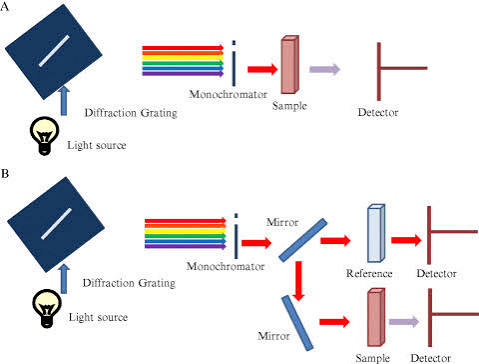
Spectroscopy
1. Introduction
Spectroscopy is the study of how matter interacts with electromagnetic radiation.
It can provide information about the chemical composition, structure, and properties of a sample.
2. Main Techniques
Common spectroscopic techniques include:
- UV-Visible spectroscopy
- Infrared spectroscopy
- Fluorescence spectroscopy
- Nuclear magnetic resonance spectroscopy
- Mass spectrometry
Each technique uses different physical principles to obtain information about molecules.
3. Applications
Spectroscopy is used for compound identification, concentration measurements, structural analysis, quality control, and biochemical research.
Conclusion
Spectroscopy is an important analytical approach for characterizing chemical and biological samples.